Reward Pathways Connecting Digital Poker Tables to Equestrian Bets in Regulated Mobile Applications
Skriven av Noah Schmitt · 2026-11-22

Reward Pathways Connecting Digital Poker Tables to Equestrian Bets in Regulated Mobile Applications
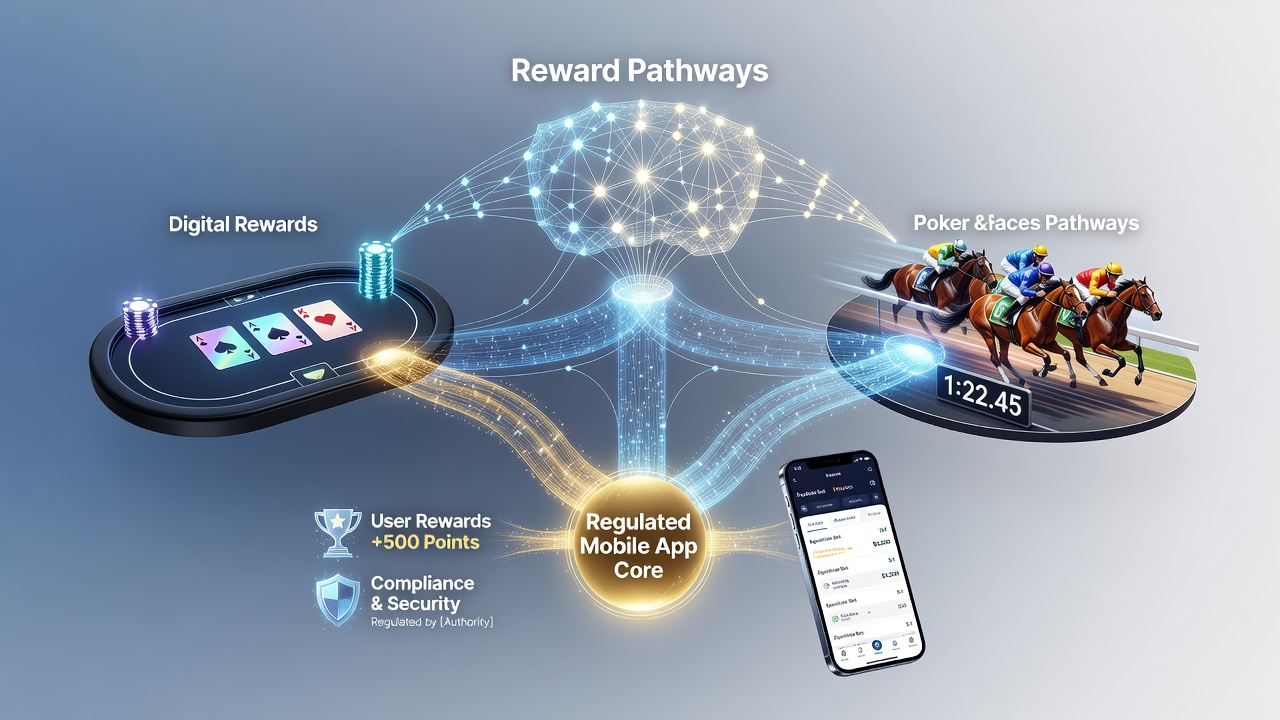
Regulated mobile applications now link digital poker tables directly to equestrian betting through shared reward pathways that convert session activity into redeemable points for horse race wagers, and this integration appears in platforms operating under multiple licensing jurisdictions as of November 2026. Developers design these systems so that poker hand volume, tournament completion, and rake contributions generate credits that transfer to equine racing markets without requiring separate deposits, while regulatory frameworks in places such as the United States and Australia mandate clear audit trails for every point transfer.
Mechanics of Cross-Product Reward Integration
Operators configure loyalty engines to track poker metrics alongside equestrian bet adjustments, which means a player completing a cash game session earns tiered multipliers that apply automatically when placing bets on thoroughbred or harness races. Data compiled by industry monitoring groups shows that these pathways reduce friction between game types because users accumulate and spend credits inside one wallet rather than managing parallel accounts, and transaction logs record each conversion with timestamps and conversion rates that regulators can review on demand.
One common structure awards base points per poker hand played, then applies bonus multipliers during promotional windows tied to major racing events such as the Breeders' Cup series, yet the same engine caps total points transferable per day to comply with responsible play limits already embedded in the application code. Studies released by the American Gaming Association indicate that platforms using unified ledgers report higher retention across both poker and racing verticals compared with siloed systems, because the pathways create continuous engagement loops rather than isolated activity spikes.
Regulatory Oversight Across Jurisdictions
Licensing bodies in Nevada and New Jersey require operators to submit detailed pathway documentation before launch, including algorithms that prevent point inflation and mandatory disclosures that inform users exactly how many poker hands equal one standard equestrian wager unit. In Australia the Australian Communications and Media Authority oversees similar rules that force mobile apps to display real-time conversion rates on screen before any transfer completes, and these measures align with broader consumer protection statutes that treat poker and racing rewards as interchangeable financial instruments subject to the same tax reporting thresholds.
November 2026 figures from multiple state gaming control boards reveal that apps incorporating these connected pathways processed millions of cross-product redemptions monthly, with average transfer values remaining below daily deposit caps enforced by the same regulatory software. Compliance teams conduct periodic code audits to confirm that reward engines do not create unintended advantages for high-volume poker participants when they shift activity to horse racing markets, and any detected anomalies trigger automatic point freezes pending investigation.
User Behavior Patterns and Data Tracking
Telemetry collected from regulated applications demonstrates that participants who begin sessions on digital poker tables frequently adjust subsequent equestrian bet sizes based on accumulated reward balances, and the pattern holds across both casual and more experienced user cohorts. Operators log these transitions through anonymized identifiers that preserve privacy while allowing aggregate analysis of how poker duration correlates with changes in racing stake distribution, and the resulting datasets feed into predictive models that optimize future promotional scheduling.
Research institutions such as the Gambling Research Exchange Ontario have examined similar multi-product environments and documented that shared loyalty mechanics encourage users to sample additional verticals without increasing overall spend velocity when spending caps remain active. In practice, a player finishing a poker tournament might receive credits valid only for the next racing card at a specific track, which directs attention toward equine events while keeping all activity inside the licensed application boundary.
Technical Implementation and Security Measures
Backend architectures employ encrypted ledgers that record every point generation event from poker play and every redemption event in equestrian sections, thereby creating immutable chains that satisfy both financial auditors and gaming regulators. Mobile applications push real-time notifications when pathways activate, such as when a completed poker session unlocks bonus multipliers for upcoming races, and these alerts include direct links to the racing interface so users can complete transfers without leaving the platform.
Security protocols include two-factor authentication for any point transfer exceeding a defined threshold, and geolocation checks confirm that redemptions occur only within licensed territories, which prevents unauthorized cross-border movement of rewards. Developers test these systems through simulated high-load scenarios that mirror peak periods around major equestrian festivals, ensuring that pathway calculations remain accurate even when thousands of simultaneous poker and racing sessions occur.
Conclusion
Regulated mobile applications continue to refine reward pathways that connect digital poker tables to equestrian bets by embedding conversion mechanics directly into unified loyalty frameworks, and data from November 2026 demonstrates measurable activity across multiple jurisdictions. Oversight from bodies including the Nevada Gaming Control Board and the Australian Communications and Media Authority maintains transparency through mandatory reporting, while technical safeguards protect point integrity and user privacy. The resulting ecosystem allows seamless transitions between game types without compromising regulatory compliance or introducing new financial risks beyond those already addressed by existing responsible gambling controls.