How Swedish Regulations Shape Player Transitions Between Live Football Odds and Poker Tournament Structures on Mobile Platforms
Skriven av Noah Schwarz · 2026-09-27
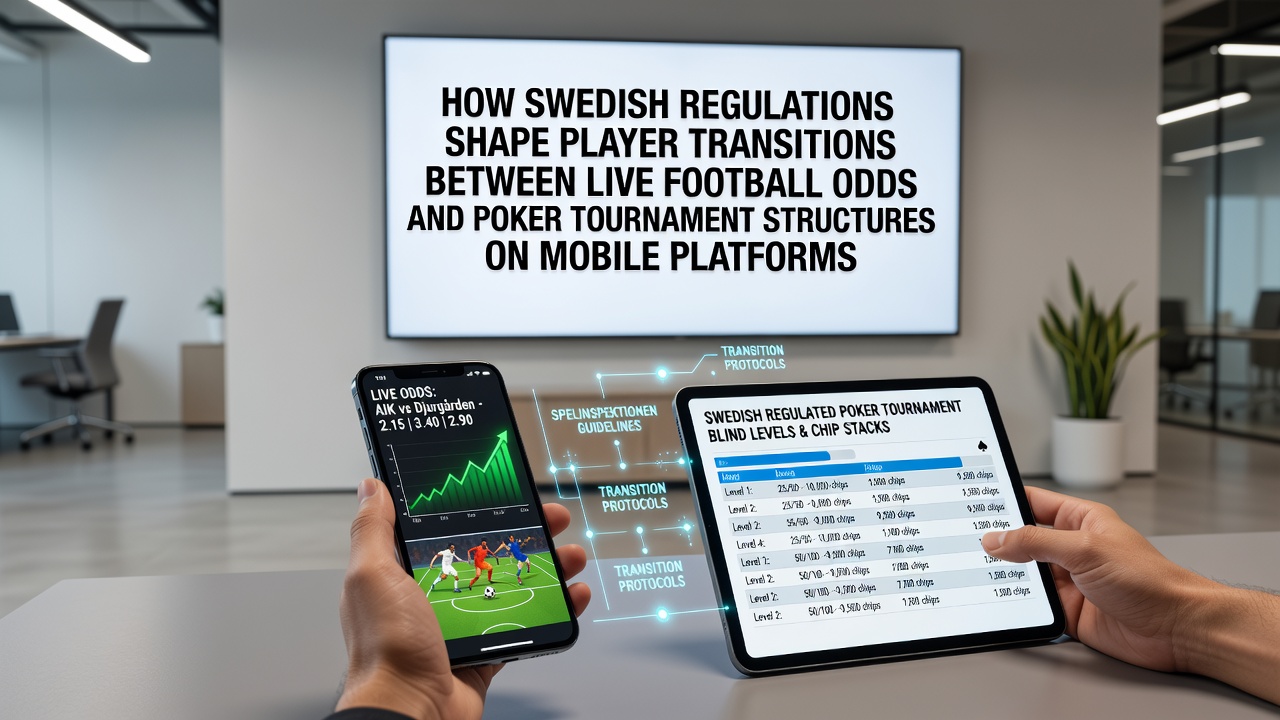
How Swedish Regulations Shape Player Transitions Between Live Football Odds and Poker Tournament Structures on Mobile Platforms
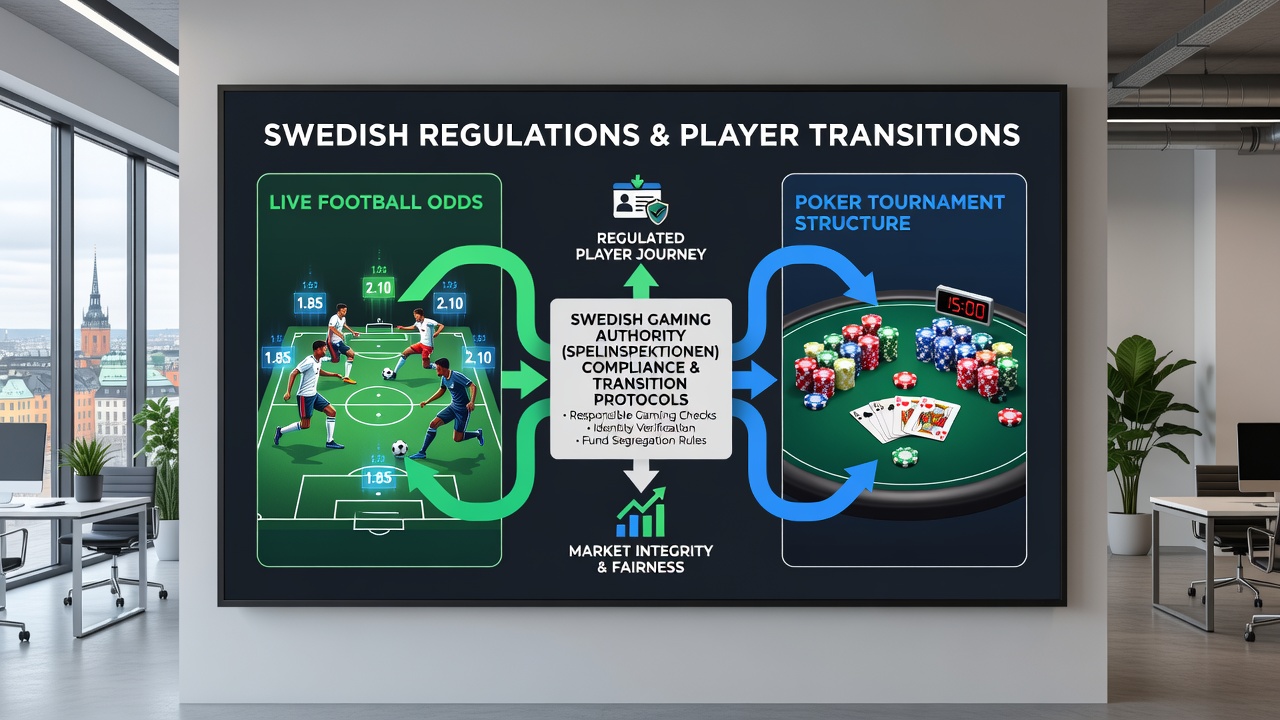
Swedish gambling regulations require licensed operators to maintain strict separation protocols when players move between live football betting markets and poker tournament entries on mobile applications, and these rules have evolved to address cross-product engagement patterns that emerged after the 2019 re-regulation of the market. The Swedish Gambling Authority enforces licensing conditions that mandate real-time verification systems, session tracking tools, and responsible gambling prompts that activate during any shift from one product category to another.
Core Licensing Requirements for Mobile Operators
Operators holding Swedish licenses must integrate identity checks at multiple points in the player journey, which directly affects how users navigate from live football odds interfaces to poker tournament lobbies on smartphones and tablets. Data from licensed platforms shows that mandatory cooling-off periods and deposit limit displays trigger automatically when activity patterns indicate a potential transition, and these features remain consistent across both football and poker sections of the same application. Researchers tracking user flows have noted that platforms must log every product switch with timestamps and stake amounts, creating detailed records that regulators review during compliance audits.
Technical Standards for Product Transitions
Mobile applications approved under Swedish rules incorporate unified wallet systems that display remaining balances and loss limits in real time, yet these same systems block instant transfers between football betting balances and poker buy-in amounts without an intermediate confirmation step. The regulations specify that players receive clear information about remaining session time and current gambling intensity before entering a poker tournament structure after placing live football wagers, and operators have implemented pop-up summaries that detail previous activity within the same hour. Figures released by the authority indicate that compliance with these standards has led to measurable changes in how frequently users complete transitions on regulated platforms compared with unlicensed alternatives.
Impact on Live Football Odds and Poker Structures
Live football odds update continuously during matches, and Swedish rules require that any move to a poker tournament registration page includes a fresh risk assessment notification if the player has already exceeded 60 minutes of active betting within that session. Tournament structures in poker apps must display blind levels, stack sizes, and payout distributions alongside a separate responsible gambling overlay that references the user's recent football betting history, and this overlay cannot be dismissed until the player acknowledges it. Observers note that these layered requirements slow down the transition process by several seconds on average, which aligns with regulatory goals of encouraging deliberate decision-making rather than impulsive shifts between products.
September 2026 Compliance Updates
Beginning in September 2026, updated technical standards will require operators to apply enhanced data-sharing protocols between football and poker modules on mobile devices, allowing regulators to analyze transition frequency across the entire licensed market in aggregated form. These changes build on existing legislation and will standardize how applications report cross-product activity to the authority without exposing individual player identities. Industry reports indicate that platforms are already testing new APIs to meet the September deadline while maintaining compatibility with existing responsible gambling tools.
Player Verification and Session Management
Every licensed mobile platform must verify player age and location at the start of each session and again when a transition occurs between live football odds and poker tournament formats, according to guidelines issued by the Swedish Gambling Authority. Session timers reset or carry over depending on the nature of the transition, and data shows that most applications now use a single continuous timer that covers both product types once a player has logged in. This approach ensures that time-based interventions remain active regardless of whether the user is viewing football markets or selecting poker tables.
Conclusion
Swedish regulations continue to define the boundaries within which mobile operators can facilitate movement between live football odds and poker tournament structures, and the framework emphasizes consistent application of verification, limit-setting, and disclosure requirements across both categories. Platforms that meet these standards provide users with structured pathways that incorporate mandatory checkpoints, while the upcoming September 2026 adjustments will further refine reporting mechanisms used by the authority. The result is a regulated environment where transitions remain possible but occur within clearly documented technical and procedural constraints that prioritize player protection measures.